

How to Structure an AI Song: Verse, Chorus, and Bridge
A verse gives the listener a new scene; a chorus gives them a line to remember. To structure an AI song in Flow Music AI, put short, labeled sections in Lyrics, write the musical contrast in Styles, and repeat the chorus text where you want it to return. Listen for that return before adding a bridge.
Section headings such as [Verse 1] and [Chorus] communicate intent. They do not lock the recording to an exact sequence, bar count, melody, or duration. The example below gives you a plan you can check by ear, even if the result interprets the headings loosely.
Give each section one job
Start with verse → chorus → verse → chorus. Write the chorus first if you already know the line the listener should remember. Then make the verses earn that line: give the first verse a concrete situation and let the second show what changes.
In Andrea Stolpe’s Berklee Online songwriting lesson, verses use details to make the chorus message feel earned. Her second-verse lesson gives a useful check: bring in fresh imagery that develops the idea. In the example below, the first verse waits outside a closed station; the second takes a step toward home. Both lead back to the same promise.

Concept illustration of a planned section order. It does not show a Flow Music AI interface or a measured output.
Paste the words and describe the contrast separately
Open the generator and choose Custom. Enter a working title, keep Instrumental off for a sung version, and paste the words below into Lyrics. The on-screen lyric suggestions insert text; you can edit it directly. For the full form walkthrough, see how to turn lyrics into a song.
Working title: Keep the Window Lit
[Verse 1]
Rain beads on the station glass
The last train fades from view
I tuck the ticket in my coat
And read your note again

[Chorus]
Keep the window lit tonight
I can find my way by that small light
Keep the window lit tonight
I am coming home

[Verse 2]
The baker lifts the morning gate
I turn onto our street
Your porch is pale against the rain
And I can hear my feet

[Chorus]
Keep the window lit tonight
I can find my way by that small light
Keep the window lit tonight
I am coming home
Write out the chorus again rather than asking the model to infer what “repeat chorus” refers to. Put production direction in Styles, where it can stay distinct from the words meant to be sung:
Warm acoustic folk-pop with fingerpicked guitar and a clear lead vocal. Keep the verses close and restrained; open up the chorus with a fuller backing and a clear returning hook.
The sample requests contrast without assigning exact beats or notes. If you need more direction for the voice, use the vocal prompt guide and add just one useful detail. The generator showed 10 credits per request when checked on November 12, 2026; use the live estimate and your balance before submitting.
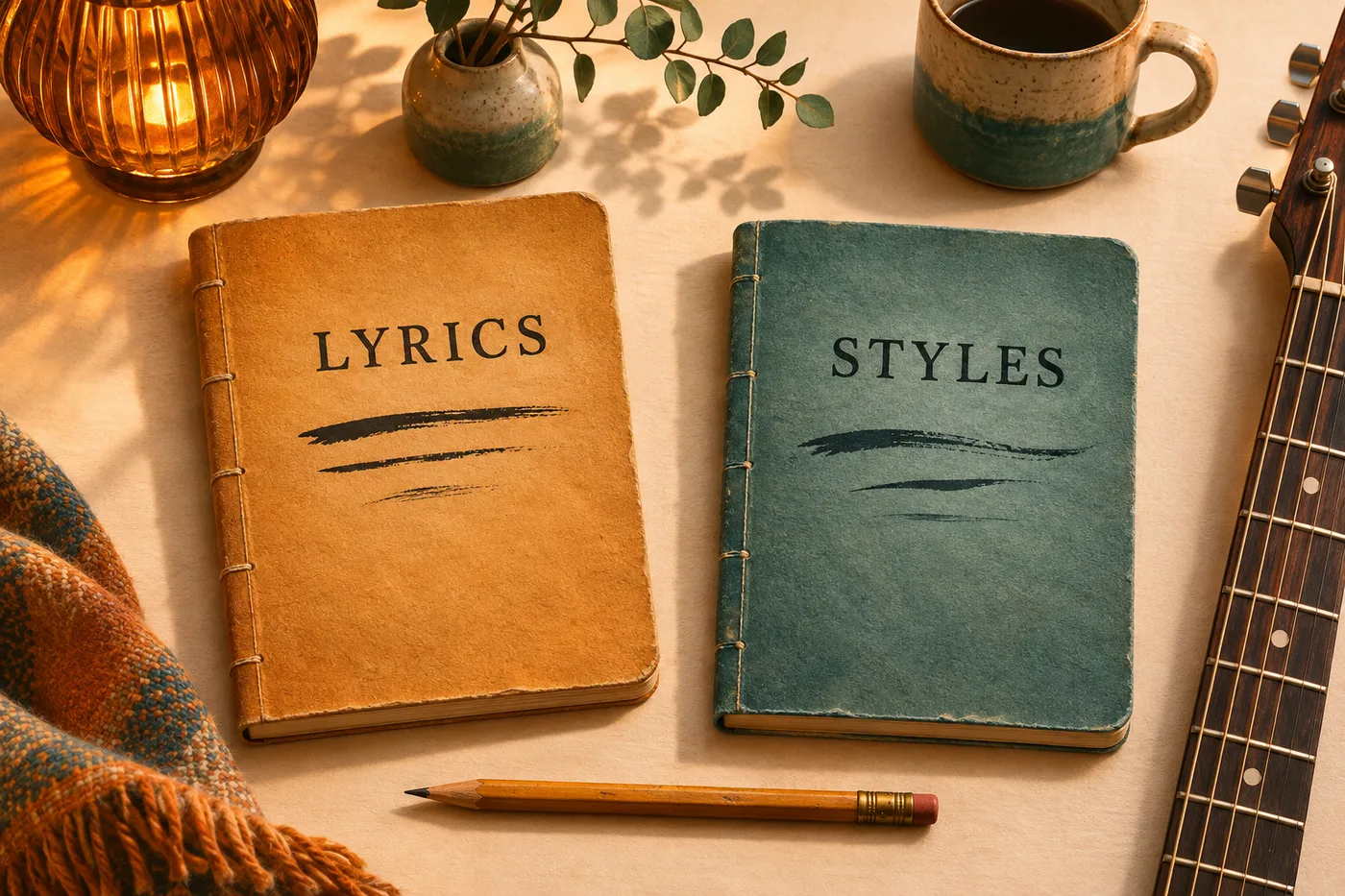
Concept illustration of the two kinds of input. The notebooks are not controls in the generator.
Add a bridge when there is a reason to turn
A bridge can offer a new thought before the last chorus. In this song it might reveal why the light matters. Add it between the second verse and the final chorus only if you want that last return to carry a different meaning. For example:
[Bridge]
I thought the road would teach me
How to leave the past behind
But every mile was leading
To the door I had in mind
Keep the final chorus in the lyric sheet. If the song already says what it needs to say, leave the bridge out. One clear return is easier to recognize than several short sections with no distinct role.
Listen for the section change and the return
On the first pass, set the lyric sheet aside. Note where you first recognize the hook and whether you can hear it return. On the second pass, compare the recording with the text. Did the second verse introduce a new scene? Did the chorus words come back? Did the vocalist sing a heading or omit a key line?

Concept illustration of listening and review. It does not represent a tested song or benchmark.
If a heading is sung, simplify the labels and remove stage directions from the lyric field. If the hook is missing on the return, check that you pasted the complete chorus twice. If the words return but the chorus feels flat, keep the lyrics and ask in Styles for one audible change, such as fuller backing on the hook. Make one revision per request so you can tell what changed; another generation can still vary the melody and arrangement.
Save a usable version before trying another arrangement. The generation budget guide can help you cap retries, and the MP3 guide shows how to keep the file you reviewed. For public or paid use, check the Terms of Service, rights to any supplied lyrics, and the destination’s rules.
Flow Music AI checked the live form and linked sources on November 12, 2026. The lyric and style examples are original inputs; no controlled generation test was performed.